
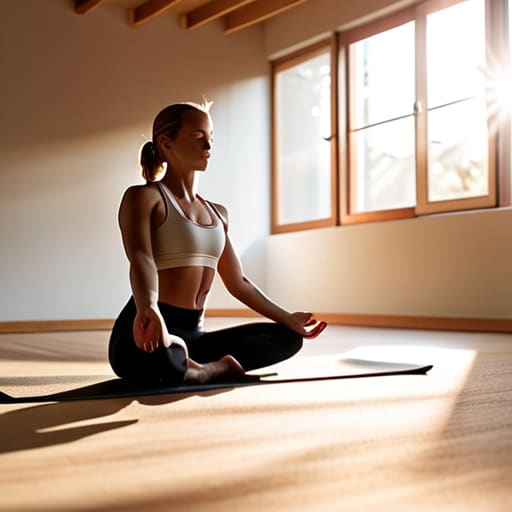
I spent the better part of last Tuesday staring at a pile of expensive, neon-colored kettlebells and a yoga mat that cost more than my first car, wondering why I felt more exhausted just looking at them than actually using them. The fitness industry loves to sell you the idea that a successful home workout for beginners requires a dedicated studio space, high-tech sensors, and a subscription to an app that pings you every twenty minutes. It’s a lot of noise designed to separate you from your paycheck. In my experience, most of that gear is just clutter waiting to happen, and it does nothing to solve the actual problem of staying functional as you age.
I’m not here to sell you on a lifestyle brand or a thirty-day transformation miracle. What I want to do is strip away the fluff and give you a functional blueprint for movement that actually fits into a busy, real-world schedule. We’re going to focus on a few foundational movements you can do in your living room—no fancy equipment or specialized flooring required—to build a baseline of strength that lasts. Let’s get to work on what actually stays fixed when the hype dies down.
Mastering Bodyweight Exercises for Beginners Without the Fancy Gear
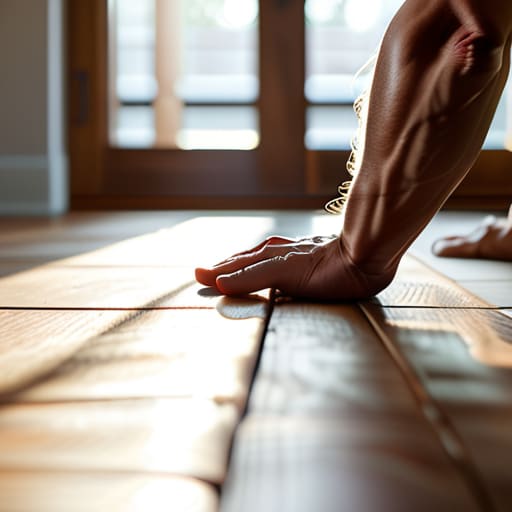
Look, you don’t need a subscription to a boutique gym or a rack of chrome dumbbells to get moving. When I started looking at my own physical maintenance through the lens of systems engineering, I realized the most efficient tool I have is my own mass. If you want to figure out how to start working out at home, start with the fundamentals: push-ups, squats, and planks. These aren’t flashy, but they are the bedrock of functional strength. They work because they force your muscles to stabilize your frame, which is exactly what you need for real-world tasks.
The mistake most people make is trying to do too much too soon and burning out by Tuesday. Instead of chasing a high-intensity craze, focus on a full body home workout routine that prioritizes form over repetitions. If a movement feels shaky or your alignment is off, back it down. I’d much rather see you do five perfect, controlled lunges than twenty sloppy ones that leave your knees feeling like they’ve been through a gravel pit. Consistency beats intensity every single time.
Building a Full Body Home Workout Routine That Actually Lasts
The mistake most people make is trying to do too much, too fast. They download a complex app and commit to a grueling daily workout schedule for beginners that they can’t possibly maintain past Tuesday. If you want a full body home workout routine that actually sticks, you need to treat it like any other system: start with a stable foundation and scale up only when the current load is easy. Aim for three days a week of consistent, intentional movement rather than seven days of half-hearted effort.
Focus on a simple circuit that hits every major muscle group—legs, push, pull, and core. You don’t need a gym membership to achieve beginner fitness at home; you just need a plan that addresses your functional strength. If you’re worried about joint pain or just starting from zero, lean into low impact home exercises like slow, controlled squats or planks. The goal isn’t to destroy yourself in a single session; it’s to build a sustainable habit that functions even on the days when your motivation is running low.
Three ways to stop overcomplicating your setup
- Stop waiting for the “perfect” moment or the right equipment. If you’re waiting for a set of adjustable dumbbells to arrive before you start, you’re just procrastinating. Start with what you have—your own body weight—and build the habit first. The gear is secondary to the discipline.
- Schedule your workouts like a non-negotiable maintenance task. I treat my home gym sessions the same way I treat a scheduled oil change on a project car: it’s a necessary part of keeping the system running. If it isn’t on the calendar, it isn’t going to happen.
- Focus on progressive overload, not just sweating. It’s easy to feel like you had a good workout because you’re exhausted, but exhaustion isn’t a metric for progress. Track your reps and your form. If you did ten push-ups last week, aim for eleven this week. That’s how you actually build something that lasts.
The Bottom Line
Stop waiting for the perfect setup; your body is the only piece of equipment that matters, so start moving with what you have right now.
Consistency beats intensity every single time—a mediocre workout you actually do is infinitely better than a “perfect” routine that stays on your to-do list.
Cutting Through the Noise
At the end of the day, you don’t need a subscription to a fitness app or a room full of chrome dumbbells to see results. We’ve covered the essentials: mastering those fundamental bodyweight movements, selecting exercises that actually target your entire system, and building a schedule that doesn’t fall apart the moment your work week gets hectic. It’s about functional consistency rather than chasing some high-intensity trend that leaves you burnt out by Tuesday. Focus on the mechanics, respect the recovery, and keep your setup simple enough that you have zero excuses to skip a session.
Building a habit is a lot like restoring an old synthesizer; you don’t just flip a switch and expect it to sing. You have to work through the grit, calibrate the components, and be patient with the process. Don’t aim for perfection right out of the gate. Just aim to be slightly more capable today than you were yesterday. Once you stop looking for the magic pill and start focusing on the reliable fundamentals, you’ll realize that the most effective tools for a better life are usually the ones you already own.